How to Bridge the Gender Gap in Entrepreneurship
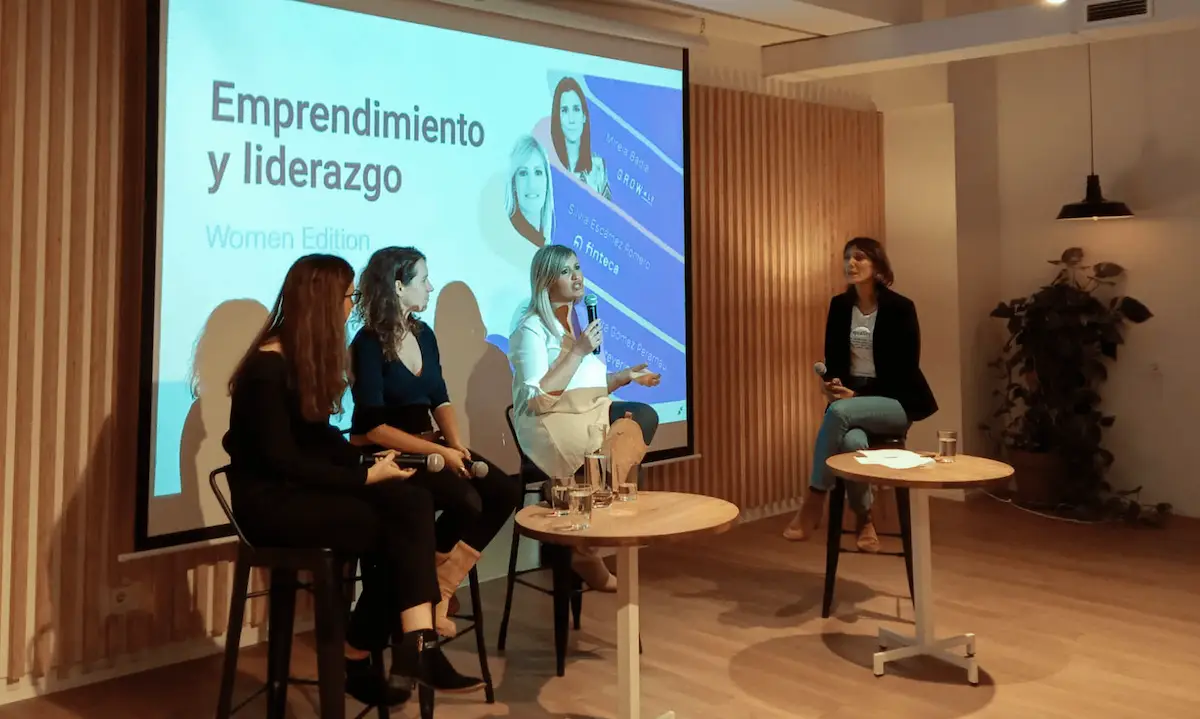
Did you know that only 20% of people who decide to start their own business are women? The financial solution Qonto recently brought together a group of leading female entrepreneurs to discuss why this gender gap exists in the world of entrepreneurship and how organizations and professionals can help bridge it.
The talk, which took place on Wednesday, November 17, at Aticco , featured the following speakers: Silvia Escámez, co-founder and CEO of Finteca; Mireia Badia, CEO and co-founder of Grow.ly; Laura Gómez, CEO and founder of Catevering; and Paloma Blázquez, Director of Marketing and Communications at Qonto Spain, who served as moderator.
Under the title “Entrepreneurship and Leadership – Women’s Edition,” the female entrepreneurs shared their perspectives and experiences, while also inspiring others and discussing the key factors for promoting women’s empowerment in the business world.
More investment
The numbers speak for themselves. Meanwhile, as Silvia Escámez explains, 60% of the workforce at startups is made up of women; yet only 20% of founders and leaders are women. There is a significant disparity, and something that prevents or discourages women from becoming entrepreneurs.
On the one hand, as the speakers noted, investment from venture capital firms, business angels, and venture capitalists is lower in projects led by women than in those led by men. This, as Escámez argued, is surprising, since, as she asserts, “the return is higher in the case of women.”
In this regard, Finteca’s CEO noted that perhaps the problem stems from the fact that women tend to keep a lower profile and be more cautious, and this can lead us to “fail to sell our project effectively.” It is precisely this tendency to be more cautious that lends greater reliability and viability to women’s projects, as they seek to thoroughly validate their ideas before launching their ventures.
Mireia Badia, CEO of Grow.ly, explained that as an employer herself, she has realized that this isn’t limited to entrepreneurship but also happens at the team level: “Male entrepreneurs are better at selling themselves, even with a worse product. We have to do a lot of the work ourselves; many women tend to undervalue ourselves.”
Networks of Women Entrepreneurs
During the session, the speakers pointed out shortcomings and challenges while also proposing ideas and solutions. So, when it came time to pitch to investors, the three entrepreneurs agreed on the importance of self-confidence and finding support.
As Laura Gómez explained: “When I first started my business, I felt very alone when dealing with investors and partners. Women’s communities are a huge help, not only in securing resources but also in making you feel supported.” To foster this collective support, there are various networks of women entrepreneurs. In the Fintech and Insurtech sectors, for example, women entrepreneurs can find support through the Fintech Women Network , created by the Spanish Fintech and InsurTech Association.
Funding Programs for Women Entrepreneurs
In addition to support networks, there are also specific funding or acceleration programs for women entrepreneurs. One example is the Wayra Scale Up Womenprogram, which we have launched this year through Aticco .
Although programs specifically for women—just like quotas—are not without controversy, Badia reflected on the need for them: “Today, acceleration or funding programs specifically for women are necessary because if we don’t drive change, it won’t happen—we have to foster it.”
For the CEO of Catevering, one of the areas where there is still the most progress to be made is investment. Her personal experience is proof of this: “I’ve pitched to investment funds, and they would only look at my partner even though I was the one answering the questions.”
All in all, as Escámez said, “women’s talent is impressive.” So why don’t we make way for that talent?
The values that the speakers wanted to convey to the audience and to women who want to take the plunge into entrepreneurship were perseverance, balance, and keeping an open mind toward the changes to come.
Laura, Silvia, and Mireia are doing their part to advance something very important for achieving equality: ensuring there are more and more female role models in business. Qonto ES, for its part, uses events like this to help the rest of the community see the potential of women in leadership.